

Mens Mental Health Statistics in America: Understanding the Crisis
Mens mental health statistics reveal a growing crisis in America, with high suicide rates, untreated depression, and major barriers to care. Learn why awareness, advocacy, and compassionate support are essential to helping men feel seen, heard, and empowered to seek help.
Mental health affects every community in the United States, but men often face a unique and troubling reality when it comes to emotional well-being. While millions of men experience depression, anxiety, trauma, loneliness, and substance use struggles, many suffer in silence. The numbers tell a painful story, and honestly, it’s one we can’t afford to ignore any longer.
Looking at mens mental health statistics helps us understand the scale of the problem. More importantly, it shows why nonprofits, advocates, families, workplaces, and communities must work together to create spaces where men feel safe asking for help. Behind every statistic is a person, a family, a friendship, and a life that matters.
For many men, mental health struggles are shaped not only by symptoms but also by social expectations. From a young age, many are taught to “be strong,” “man up,” or keep emotions hidden. Over time, that pressure can turn vulnerability into shame and silence into suffering. That silence can be dangerous.
This article takes a closer look at mens mental health statistics in America, including suicide rates, treatment gaps, common barriers to care, major risk factors, and why awareness is such a critical part of the solution. If we want healthier families and stronger communities, we have to start by facing this crisis with compassion and courage.
The State of Men’s Mental Health in America
Mental health conditions affect men across every age group, race, income level, and background. Yet public conversations about emotional well-being often overlook how many men are struggling every single day.
According to the National Institute of Mental Health, millions of men in the United States experience a mental illness each year. Conditions such as depression, anxiety disorders, bipolar disorder, post-traumatic stress disorder, and substance use disorders are not rare among men. They are widespread, and in many cases, underdiagnosed and undertreated.
That’s a huge part of the problem. Men may experience real emotional pain but never receive a diagnosis, never talk to a therapist, and never tell the people closest to them what they’re carrying. On the outside, they may appear fine. On the inside, they may be overwhelmed, isolated, or barely holding on.
Several issues contribute to this gap, including:
social stigma around emotional expression
fear of being judged as weak
lack of mental health education
fewer supportive spaces for open conversations
difficulty accessing affordable care
cultural pressure to solve problems alone
When these barriers pile up, mental health challenges can deepen over time. And sadly, that can increase the risk of crisis.
Why Mens Mental Health Statistics Matter
Statistics do more than provide numbers. They reveal patterns, expose blind spots, and help us understand where support is most urgently needed.
When people hear about mental health in broad terms, it can sound distant or abstract. But mens mental health statistics make the issue real. They show that this isn’t just about a few isolated cases. It’s a nationwide public health concern affecting families, schools, jobs, friendships, and entire communities.
These numbers matter because they help:
raise awareness about the seriousness of the issue
reduce stigma by showing how common mental health struggles are
guide nonprofit advocacy and outreach efforts
improve access to resources and support systems
encourage men to seek help earlier
Awareness alone won’t solve the problem, but it’s a necessary starting point. People are more likely to act when they understand the scale of the crisis.
Suicide Rates Among Men
One of the most heartbreaking and urgent areas within mens mental health statistics in America is suicide.
A Major Public Health Concern
According to the Centers for Disease Control and Prevention, nearly 49,000 people died by suicide in the United States in 2023, making suicide one of the leading causes of death nationwide. Men account for approximately 80 percent of all suicide deaths, even though they make up about half of the population.
That disparity is staggering.
It tells us that men are not just struggling silently. In far too many cases, they are dying silently too.
There are many reasons this gap exists. Men are often less likely to seek early mental health treatment, less likely to talk openly about emotional pain, and more likely to be influenced by cultural norms that equate vulnerability with weakness. Some may turn to anger, withdrawal, workaholism, or substance use instead of openly expressing depression or despair.
And here’s the hard truth: when distress goes unseen or untreated, the consequences can be devastating.
Suicide prevention efforts must include men-centered awareness, compassionate outreach, and support systems that make it easier, not harder, for men to ask for help.
Depression and Anxiety in Men
Depression and anxiety are often discussed as though they show up the same way in everyone. But in men, symptoms may look different than what many people expect.
A man living with depression may not always appear tearful or visibly sad. He may seem irritable, emotionally shut down, constantly exhausted, angry, numb, or disconnected. He may work longer hours, drink more, isolate himself, or become unusually withdrawn from family and friends.
Anxiety can look similar. Instead of openly saying, “I’m overwhelmed,” a man might become restless, short-tempered, controlling, avoidant, or physically tense all the time.
This matters because when symptoms do not match common stereotypes, they are easier to miss.
Common signs of depression or anxiety in men may include:
irritability or anger
fatigue or low energy
loss of interest in usual activities
sleep problems
difficulty concentrating
increased alcohol or drug use
emotional withdrawal
physical complaints such as headaches or body tension
feelings of hopelessness or worthlessness
These struggles are real, and they deserve serious attention. Too often, men are encouraged to push through, tough it out, or keep moving. But untreated depression and anxiety rarely disappear just because someone ignores them.
Why Men Are Less Likely to Seek Help
One of the most troubling parts of mens mental health statistics is not just how many men struggle, but how many never reach out.
Barriers to Mental Health Support
Many men are less likely to seek mental health care because of deeply rooted cultural messages about masculinity. In many environments, men are rewarded for appearing emotionally strong, self-reliant, and in control at all times. Asking for help can feel, to some, like failing that expectation.
Common barriers include:
stigma around discussing emotions
fear of appearing weak
lack of mental health education
limited access to supportive conversations
concerns about cost or availability of care
distrust of the healthcare system
belief that they should handle things on their own
For some men, the issue is not that they do not want support. It’s that they have never been shown what healthy support looks like.
They may not know how to talk about what they feel. They may not have close friendships where vulnerability feels safe. They may worry they will be dismissed, mocked, or misunderstood. So instead, they stay quiet.
That silence can make pain feel even heavier.
Social Expectations and Masculinity
Let’s be real: many men grow up hearing that strength means silence. Crying is mocked. Vulnerability is discouraged. Emotional openness is treated like something to avoid.
Those messages don’t just disappear in adulthood.
They shape how men respond to grief, failure, trauma, rejection, loneliness, and depression. Instead of saying, “I’m struggling,” many men learn to say nothing at all. Or they express pain indirectly through anger, risky behavior, emotional detachment, or substance use.
This does not mean masculinity itself is the problem. The problem is a narrow version of masculinity that leaves no room for emotional honesty.
Healthy masculinity can include resilience, responsibility, compassion, courage, and openness. In fact, it takes real strength to ask for help. It takes courage to speak honestly. It takes maturity to care for your mental health before a crisis hits.
Changing the conversation around masculinity is one of the most important steps in improving mental health outcomes for men.
Risk Factors Affecting Men’s Mental Health
Mental health challenges do not happen in a vacuum. Life circumstances, stress, trauma, and isolation can all increase emotional strain.
Life Circumstances That Can Increase Stress
Many men face stressors that can affect their mental health in powerful ways, including:
job loss or financial pressure
relationship difficulties
divorce or separation
grief and loss
trauma or major life changes
social isolation
chronic illness or pain
caregiving stress
military service or first responder trauma
pressure to provide for others
For some men, identity becomes tightly tied to work, income, or being the “strong one” for everyone else. When something shakes that identity, such as unemployment, burnout, or personal loss, it can hit hard.
Social isolation is another major concern. Many adult men have fewer close emotional relationships than women, which means they may have less support during difficult times. A man can be surrounded by people and still feel completely alone. That kind of loneliness can quietly erode mental well-being over time.
Substance Use and Men’s Mental Health
Substance use and mental health are often deeply connected. Some men use alcohol or drugs to numb anxiety, depression, trauma, or emotional pain. What may begin as a coping mechanism can quickly become another layer of suffering.
For many men, substance use is socially normalized in ways that emotional honesty is not. A man may feel more comfortable saying he needs a drink than admitting he feels hopeless. That cultural pattern can make it easier to hide pain and harder to address what is really going on.
This is why mental health advocacy must also recognize the overlap between emotional well-being and substance use. Men need support that addresses the full picture, not just the surface behavior.
Why Awareness Matters
The Importance of Addressing Men’s Mental Health
Raising awareness about men’s mental health can help reduce stigma and create more opportunities for honest conversation. When men feel supported, understood, and less judged, they are more likely to seek help, build healthier coping skills, and connect with the people around them.
Awareness matters because it can:
challenge harmful stereotypes
normalize conversations about mental health
help people recognize warning signs earlier
encourage treatment before a crisis develops
remind men that they are not alone
For nonprofits, awareness campaigns are especially important. They help bring education into schools, workplaces, communities, faith settings, and digital spaces. They also help families and friends learn how to support the men in their lives with empathy instead of silence.
The more visible this issue becomes, the harder it is to ignore.
Moving Toward Solutions
Encouraging Open Conversations
Addressing the men’s mental health crisis requires more than concern. It requires action.
We need to create environments where men feel safe being honest about stress, depression, anxiety, trauma, and emotional pain. That means building a culture where vulnerability is respected, not ridiculed.
Some meaningful ways to move toward solutions include:
encouraging open conversations in families and friendships
improving mental health education for boys and men
increasing affordable access to counseling and support
training workplaces to respond to emotional well-being with compassion
supporting nonprofits that focus on prevention, outreach, and advocacy
promoting peer support and community-based connection
Sometimes change starts with something small. A check-in. A conversation. A moment of listening without judgment. Those things may seem simple, but they matter.
When a man feels seen, heard, and supported, it can change the direction of his life.
What Nonprofits Can Do
Mental health nonprofits play a powerful role in addressing this crisis. They often reach people who might never walk into a clinic or openly ask for help. Through education, storytelling, support groups, campaigns, and community partnerships, nonprofits can help shift the culture around men’s mental health.
A nonprofit can make a difference by:
sharing accurate and compassionate mental health information
hosting awareness events and community discussions
creating safe spaces for men to talk openly
connecting individuals to therapists, hotlines, and local resources
advocating for policy changes that improve access to care
partnering with schools, employers, and community leaders
That kind of work saves lives. Plain and simple.
How Families and Friends Can Help
Awareness doesn’t belong only to professionals or organizations. Families and friends are often the first people to notice when something is off.
If you’re concerned about a man in your life, don’t wait for the perfect words. Reach out. Ask how he’s really doing. Listen without trying to immediately fix everything. Let him know support is available.
Helpful phrases might include:
“You don’t have to carry this alone.”
“I’m here to listen.”
“It’s okay to talk about what you’re feeling.”
“Getting help is a strong step, not a weak one.”
Compassion goes a long way. Sometimes one safe conversation can open the door to healing.
Frequently Asked Questions About Mens Mental Health Statistics
Why are mens mental health statistics important?
They highlight the scale of mental health struggles among men and reveal major issues such as high suicide rates, underdiagnosis, stigma, and low treatment-seeking behavior. These statistics help guide awareness and advocacy efforts.
Why do men have higher suicide rates?
There is no single cause, but contributing factors include stigma, emotional isolation, untreated mental health conditions, reluctance to seek help, substance use, and cultural pressure to appear strong and self-reliant.
Are men less likely to seek mental health treatment?
Yes, many men are less likely to seek treatment due to fear of judgment, social expectations, limited mental health education, and a lack of supportive environments where they feel safe opening up.
What are common signs of mental health struggles in men?
Signs can include irritability, anger, social withdrawal, increased substance use, sleep problems, hopelessness, fatigue, loss of interest, and difficulty concentrating.
How can we support men’s mental health?
We can support men’s mental health by reducing stigma, encouraging honest conversations, improving access to care, funding community resources, and supporting nonprofits that focus on mental health education and outreach.
A Final Word on Breaking the Silence
Mens mental health is not a side issue. It is not a niche topic. It is a public health concern affecting families, workplaces, communities, and futures across America.
The numbers make one thing painfully clear: too many men are struggling without support, and too many are suffering in silence. But silence does not have to be the end of the story.
Awareness can lead to conversation. Conversation can lead to connection. Connection can lead to help. And help can save lives.
Every effort to reduce stigma matters. Every honest conversation matters. Every nonprofit campaign, community resource, and supportive check-in matters. When we create spaces where men feel safe being human, we create the possibility for healing.
Call to Action:
Support awareness around men’s mental health by sharing this message, starting conversations in your community, and standing with organizations that advocate for emotional well-being. When we speak up, show compassion, and invest in support, we help break the silence and build a future where more men feel empowered to seek help and stay connected.
If you or someone you know is in crisis in the United States, call or text 988 to reach the Suicide & Crisis Lifeline for free, 24/7 support.
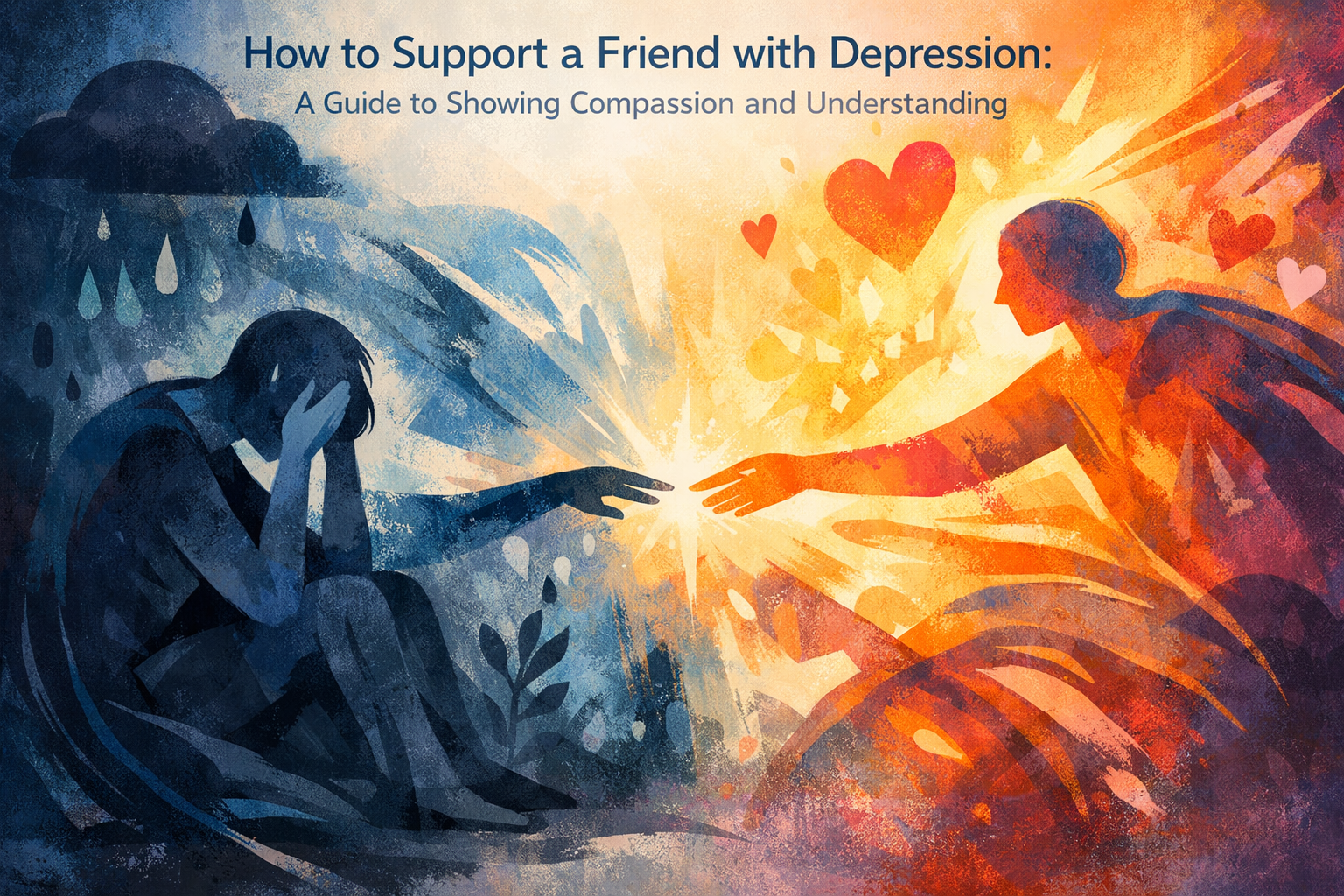
How to Support a Friend with Depression: A Guide to Showing Compassion and Understanding
Supporting a friend with depression can feel overwhelming, but small acts of compassion, listening, and encouragement can make a real difference. Here’s how to show up in a helpful and caring way.
Depression is one of the most common mental health conditions in the United States, affecting millions of people every year. And yet, even though it’s so common, many people still feel unsure about what to do when someone they care about is struggling.
When a friend is dealing with depression, it can be heartbreaking to watch. You may want to help, say the right thing, or somehow make their pain disappear. But here’s the truth: supporting a friend with depression does not mean you need to have all the answers. In fact, you don’t need to be a therapist or mental health expert to make a meaningful difference.
More often than not, the most valuable things you can offer are compassion, patience, understanding, and a willingness to stay present. A kind message, a listening ear, or a gentle check-in can go a long way when someone feels isolated or overwhelmed.
Understanding how to support someone experiencing depression can help you create a safe space where they feel seen, heard, and less alone. In this guide, we’ll walk through what depression can look like, how to start a supportive conversation, what to say, what to avoid, and when to encourage professional help.
Understanding Depression
Before you can effectively support a friend, it helps to understand what depression really is. Depression is not simply feeling sad for a day or having a rough week. It’s a serious mental health condition that can affect how a person thinks, feels, and functions in daily life.
It may impact their energy, sleep, motivation, relationships, concentration, and overall sense of self-worth. Some people with depression feel deep sadness. Others may feel numb, irritable, exhausted, or disconnected from everything around them.
One important thing to remember is this: depression does not always look the same from person to person. That’s why empathy matters so much.
What Depression Can Look Like
Depression affects people in different ways, but it often includes emotional, physical, and behavioral symptoms that can make everyday life feel incredibly hard.
Common signs of depression include:
Persistent sadness or hopelessness
Loss of interest in activities once enjoyed
Difficulty concentrating or making decisions
Changes in sleep patterns
Fatigue or lack of energy
Feelings of guilt or worthlessness
Withdrawing from friends and family
Some people may cry often. Others may put on a brave face and try to hide what they’re feeling. They may still go to work, answer messages, and seem “fine” on the surface while quietly struggling inside. That’s part of what makes depression so tricky. It doesn’t always announce itself loudly.
Because of that, support from trusted friends can be incredibly important. Sometimes just knowing that someone notices and cares can help a person feel less invisible.
Start with a Simple Conversation
When you suspect a friend may be dealing with depression, starting a conversation can feel awkward or intimidating. You may worry about saying the wrong thing or making them uncomfortable. That’s completely normal.
Still, a gentle conversation is often the first and most important step.
How to Talk to a Friend About Depression
You do not need a perfect script. You just need sincerity. Keep your tone calm, kind, and nonjudgmental. Focus on what you’ve noticed and let them know you care.
You might say:
“I’ve noticed you seem overwhelmed lately. I’m here if you want to talk.”
“You don’t have to go through this alone.”
“I care about you and want to understand what you’re going through.”
“I’ve noticed you haven’t seemed like yourself lately, and I just wanted to check in.”
These kinds of statements open the door without putting pressure on your friend. They show concern without demanding an explanation.
The goal is not to force a conversation or fix the problem on the spot. It’s simply to let your friend know that you see them, care about them, and are available.
And here’s the thing: they may not open up right away. That doesn’t mean you did anything wrong. Depression can make people withdraw, shut down, or feel unsure about trusting others with what they’re going through. Sometimes your friend may need a little time before they’re ready to talk.
That’s okay. Keep the door open.
Listen Without Trying to Fix Everything
This is where many well-meaning people get stuck. When someone we love is hurting, our natural instinct is to jump in with advice, solutions, or encouragement. We want to cheer them up, give them answers, or help them “snap out of it.”
But depression doesn’t work that way.
Why Listening Matters
Many people who struggle with depression feel misunderstood, dismissed, or judged. They may have heard things like “Just think positive,” “You have so much to be grateful for,” or “Everyone feels down sometimes.” Even when those comments are meant kindly, they can make someone feel more alone.
Listening without judgment is one of the most meaningful ways to support a friend with depression.
When your friend shares their feelings:
Avoid interrupting
Avoid minimizing their emotions
Avoid immediately offering solutions
Avoid comparing their experience to someone else’s
Avoid making it about yourself
Instead, try saying:
“That sounds really difficult.”
“I’m glad you told me.”
“I’m here for you.”
“You don’t have to pretend with me.”
“That makes sense, given what you’re dealing with.”
These responses show empathy and validate their experience. They don’t try to rush your friend past their pain. They simply say, “I hear you.”
And honestly, that matters more than you might think.
What Not to Say to a Friend with Depression
Sometimes support is also about knowing what to avoid. Certain phrases, even if well-intentioned, can come across as dismissive or hurtful.
Try to avoid saying things like:
“Just stay positive.”
“Other people have it worse.”
“You’ll get over it.”
“You just need to try harder.”
“But you have so much going for you.”
“Everyone gets sad sometimes.”
These statements can make depression feel like a personal failure rather than a real mental health condition.
Instead of pushing your friend to feel better quickly, focus on understanding their experience. Depression is not laziness, weakness, or a lack of gratitude. It’s a health issue, and it deserves compassion.
Encourage Professional Help
As much as friendship matters, it’s important to recognize its limits too. You can be supportive, caring, and present, but you cannot take on the role of a mental health professional.
When Your Friend May Need Additional Support
Depression is a serious condition that may require therapy, counseling, medication, or other professional treatment. Encouraging your friend to seek help can be one of the most caring things you do.
You might say:
“Have you thought about talking to a therapist or counselor?”
“You deserve support from someone trained to help with this.”
“I can help you look into options if that feels overwhelming.”
Try to keep your tone gentle and supportive rather than pushy. The goal is to empower your friend, not pressure them.
You might also offer practical help, such as:
Helping them research therapists or providers
Sitting with them while they schedule an appointment
Going with them to a visit if they feel nervous
Helping them make a short list of questions to ask a doctor
When someone is depressed, even small tasks can feel huge. A little support with logistics can make professional help feel more doable.
For general mental health information, resources like the National Institute of Mental Health and Mental Health America can be helpful places to start.
Continue Showing Up
One of the hardest parts of depression is that it can linger. It may not disappear after one conversation, one good day, or one kind gesture. That’s why ongoing support matters so much.
Small Acts of Support Can Make a Big Difference
Depression can make everyday life feel exhausting. Things that once seemed simple—answering a text, getting out of bed, showering, making plans—can suddenly feel like climbing a mountain.
That’s why small acts of support can be surprisingly powerful.
Ways to show up for your friend include:
Sending a simple message to check in
Inviting them for a walk or coffee
Offering help with small tasks
Bringing over a meal
Reminding them that you care about them
Including them in plans without pressuring them
Checking in again even if they didn’t respond the first time
A message like “Thinking of you today” or “No pressure to reply, just wanted you to know I care” can mean a lot.
The key is consistency. Depression often tells people they are a burden, forgotten, or unworthy of love. By continuing to show up, you gently challenge those thoughts with your actions.
Respect Their Boundaries
At the same time, support should not become pressure. Your friend may not always want to talk. They may cancel plans, need space, or struggle to respond. While it can feel frustrating, it’s important not to take it personally.
Let them know you respect their pace.
You might say:
“It’s okay if you don’t feel like talking right now.”
“I’m here whenever you’re ready.”
“No pressure, I just wanted to check in.”
This helps your friend feel supported instead of cornered.
Supporting someone with depression is often a balancing act: being present without overwhelming them, caring without controlling, and staying connected without demanding too much.
Take Care of Yourself Too
Supporting a friend with depression can be emotionally heavy, especially if you care deeply about them. You may feel worried, helpless, sad, or even exhausted. That doesn’t make you selfish. It makes you human.
Being a supportive friend does not mean sacrificing your own mental health.
Make sure you:
Set healthy boundaries
Reach out for support if you need it
Recognize that you cannot “save” someone on your own
Take breaks when necessary
Encourage professional help instead of carrying everything yourself
You can love your friend and still acknowledge your limits. In fact, healthy boundaries often make support more sustainable.
When Someone Is in Crisis
Sometimes depression becomes more serious and urgent. If your friend talks about wanting to die, harming themselves, feeling hopeless to the point of giving up, or saying others would be “better off without them,” take it seriously.
Recognizing When Immediate Help Is Needed
If a friend expresses thoughts of suicide or self-harm, immediate support is important.
In the United States, they can call or text 988 to reach the 988 Suicide & Crisis Lifeline, where trained counselors provide support 24 hours a day. You can learn more at 988lifeline.org.
If someone is in immediate danger, call 911 or seek emergency assistance right away.
If you’re with a friend in crisis:
Stay with them if possible
Remove immediate dangers if you safely can
Contact emergency help or a crisis line
Reach out to a trusted family member or support person if appropriate
Do not promise to keep suicidal thoughts a secret. Safety comes first.
Supporting a Friend Over the Long Term
Depression recovery is rarely a straight line. There may be ups and downs, good weeks and hard weeks, progress and setbacks. Supporting a friend with depression means understanding that healing often takes time.
Celebrate small victories with them. Maybe they got out of bed, made an appointment, took a short walk, or opened up about how they feel. Those things may seem small from the outside, but for someone experiencing depression, they can be huge.
Let your support be steady, not dramatic. Big speeches are not required. Showing up in ordinary, thoughtful ways often matters most.
FAQs About Supporting a Friend with Depression
How do I help a friend with depression without saying the wrong thing?
Focus on being kind, present, and nonjudgmental. You do not need perfect words. Simple statements like “I’m here for you” and “I’m glad you told me” are often enough.
Should I give advice to a friend with depression?
Usually, listening is more helpful than jumping into advice. Unless your friend asks for suggestions, start by validating their feelings and asking how you can support them.
What if my friend refuses help?
You can encourage professional support, but you cannot force it unless there is an immediate safety concern. Keep showing compassion, check in regularly, and take any talk of self-harm seriously.
Can I support a friend with depression if I’m not a mental health professional?
Yes, absolutely. Friendship and emotional support matter. Just remember that your role is to care, listen, and encourage help, not to diagnose or treat depression yourself.
When should I worry that depression is becoming a crisis?
Take immediate action if your friend talks about suicide, self-harm, wanting to disappear, or feeling like life is not worth living. In the U.S., call or text 988 for crisis support.
Final Thoughts
Supporting Someone with Depression Takes Compassion
Helping a friend with depression is not about having the perfect words. It is about being present, showing compassion, listening without judgment, and encouraging them to seek the support they deserve.
There will be moments when you feel unsure, and that’s okay. What matters most is that your friend knows they do not have to face their pain alone.
Sometimes the most powerful message you can offer is simply:
“You are not alone.”